
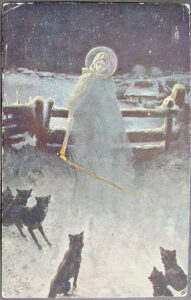
 Matka Boska Gromniczna, Our Lady of the Thunder Candles, is a figure within Polish folk Catholicism honored during the feast of Candlemas. She is also known as the Divine Mother with Wolves or the Winter Mother of God. Polish iconography depicts her alone in winter landscapes accompanied by wolves, sometimes with baskets of larks heralding spring, a departure from the standard Candlemas imagery showing Mary presenting Jesus at the Temple.
The Divine Mother with Wolves holds a dual protective nature, shielding humans from wolves while simultaneously protecting wolves from humans. A folk legend describes Mary walking through winter nights when a pursued wolf sought refuge under her cloak. When peasants with pitchforks came asking if she’d seen it, Mary didn’t betray the animal. She told the wolf: “You murderer of defenseless lambs? I should have handed you over, but my heart grieved over your misery too.” Since then, the Blessed Mother walks with her candle through February snowstorms, the wolf as her companion.
Polish ethnographic scholarship has traced connections between this Marian figure and the pre-Christian goddess Dziewanna (also called Devana). The Polish chronicler Jan Długosz documented her in his fifteenth-century chronicle as a deity of forests, hunting, the moon, and wild animals. She was depicted as a young maiden with a wolf or fox at her side, carrying bow and arrows, often wearing animal pelts. Her name derives from dziewa and dziewica, maiden and virgin. Contemporary scholars examining Polish folk Catholicism have identified systematic patterns in how pre-Christian beliefs merged with Catholic practice creating a form of dual observance.
Both goddess and Virgin share associations with wolves as companions, power over the February transitional period between winter and spring, protection against freezing weather and wild animals. The sacred herb verbascum (mullein) is called dziewanna in Polish, the goddess’s own name, and this same plant provided the wicks for gromnica candles. Medieval iconography even depicts the Blessed Virgin holding verbascum in her hand.
Candlemas, February 2 in the Catholic calendar, marks a threshold in the liturgical and agricultural year, falling midway between winter solstice and spring equinox. In Polish tradition, this is the feast of Gromnica, when long beeswax candles called gromnice (from grom, thunder or thunderbolt) are blessed and carried home. These candles served multiple protective functions. They were lit and placed in windows during thunderstorms to ward off lightning strikes. Parts were buried in crop fields to protect against wolves, or under house foundations to safeguard dwellings. February was historically the most dangerous time for wolf attacks on livestock and travelers.
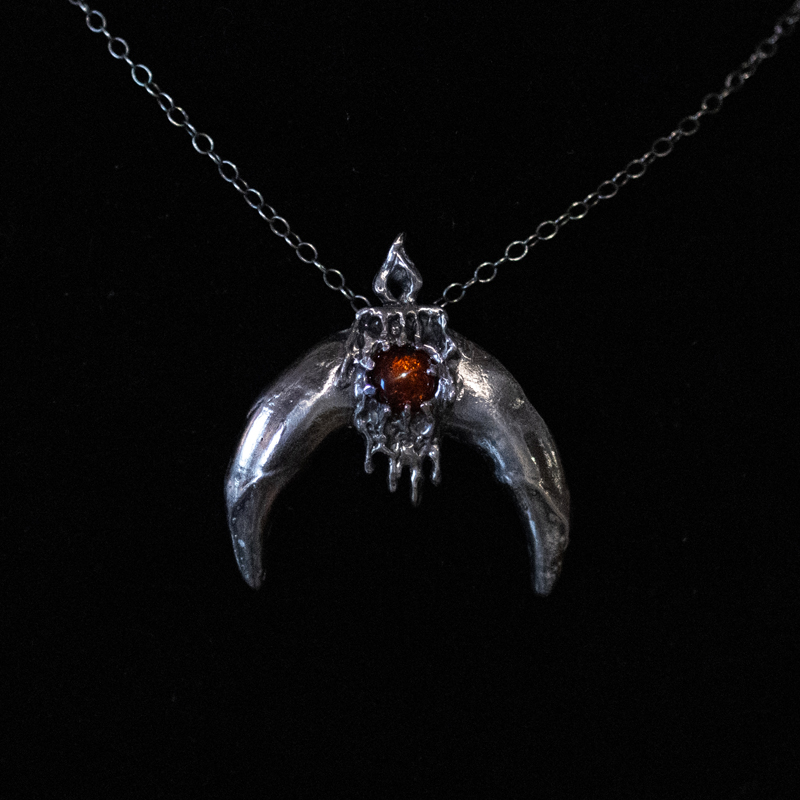
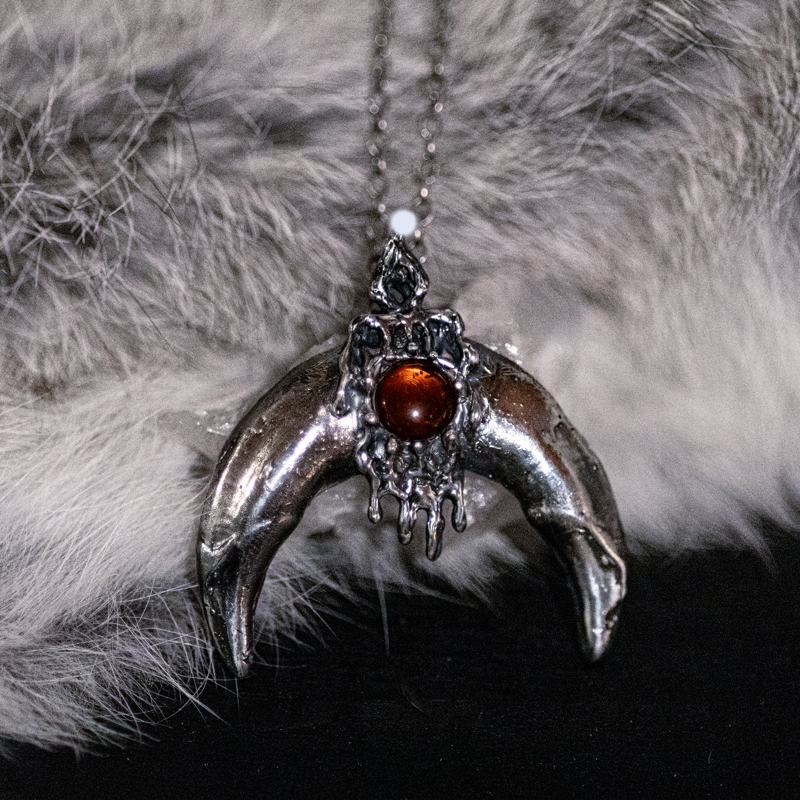
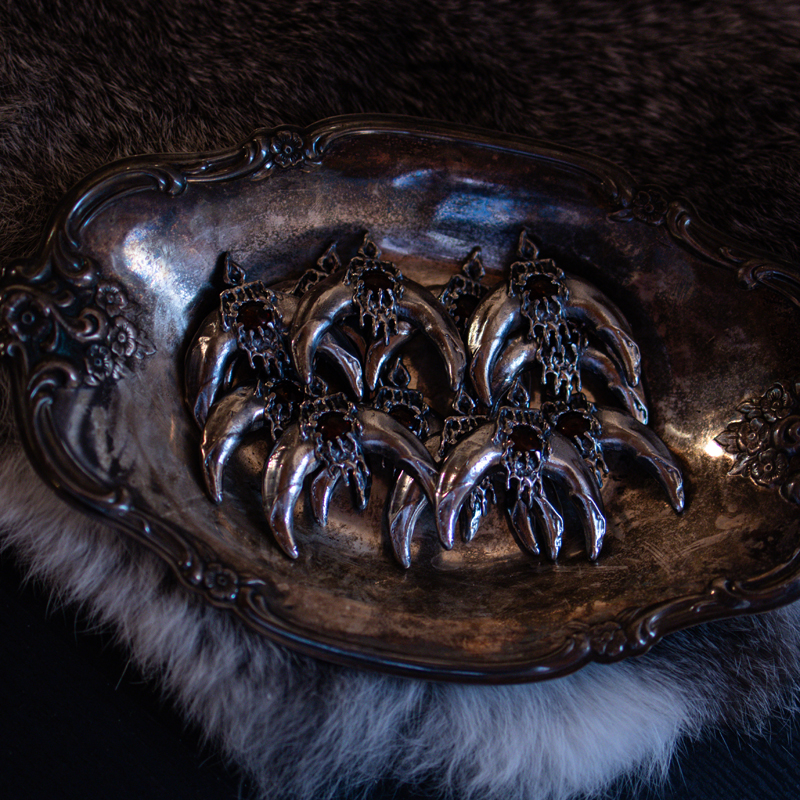
This piece was created in collaboration with Sfinga of With Cunning and Command. The design takes the form of a crescent moon molded from two wolf teeth with a candle rising between them, the iconography of Gromnica, with a baltic amber cabochon in the center. Each piece was hand-sculpted in jeweler’s wax and cast in solid sterling silver. Baltic amber is Poland’s national jewel, and amber was sometimes sewn into infant clothing to protect against supernatural baby-swapping. Nurses wore amber necklaces so infants would absorb only health. Its electromagnetic properties suggested power to attract and neutralize negative forces.
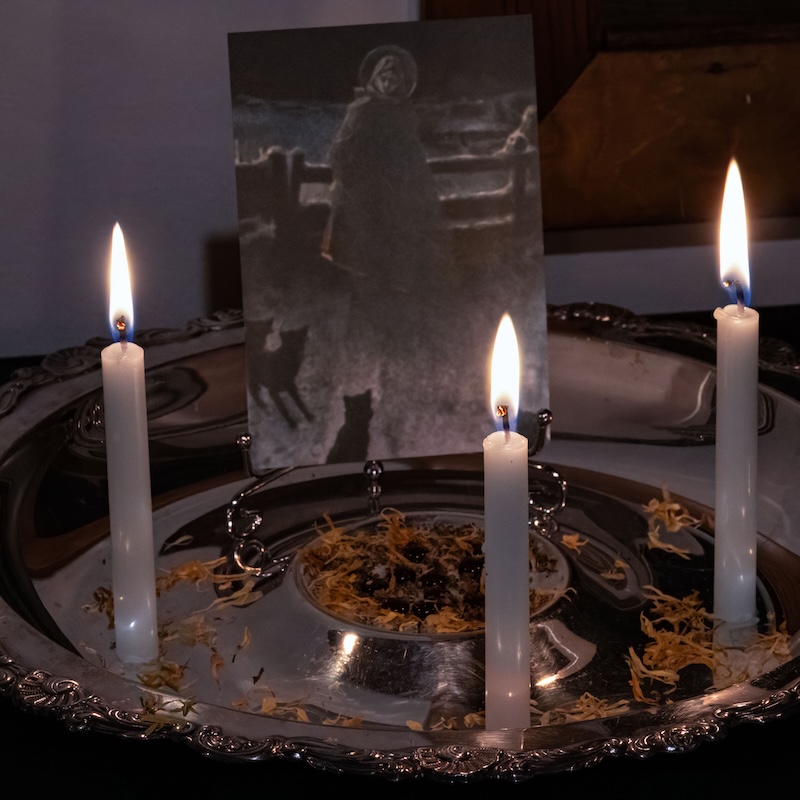
The amber was prayed over for nine nights surrounded by candles, exposing them to their light, in a novena to the Divine Mother in the days leading up to Candlemas. The amber rests above ritual powders prepared by Sfinga in honor of the White Wolf Mother, an important spirit within the Balkan pantheon, creating a syncretic working that bridges Polish and Balkan wolf-mother traditions, as well as our respective Catholic and Orthodox practices. Sfinga is also releasing a set of charm bags honoring the Balkan Wolf Mother available on her site. The completed pieces were further ritually empowered for protection and illumination, and specifically the protection conferred through the illumination of danger and threats, as well as our own blind spots.
When my father, who was a Polish immigrant and WW2 refugee, passed in 2009, I began researching Polish folklore and customs as a way of connecting with my ancestral folkways. Matka Boska Gromniczna was the first figure who I connected with deeply. In his name, I’m donating $50 for each piece sold to RAICES, an organization dedicated to protecting immigrants and refugees.
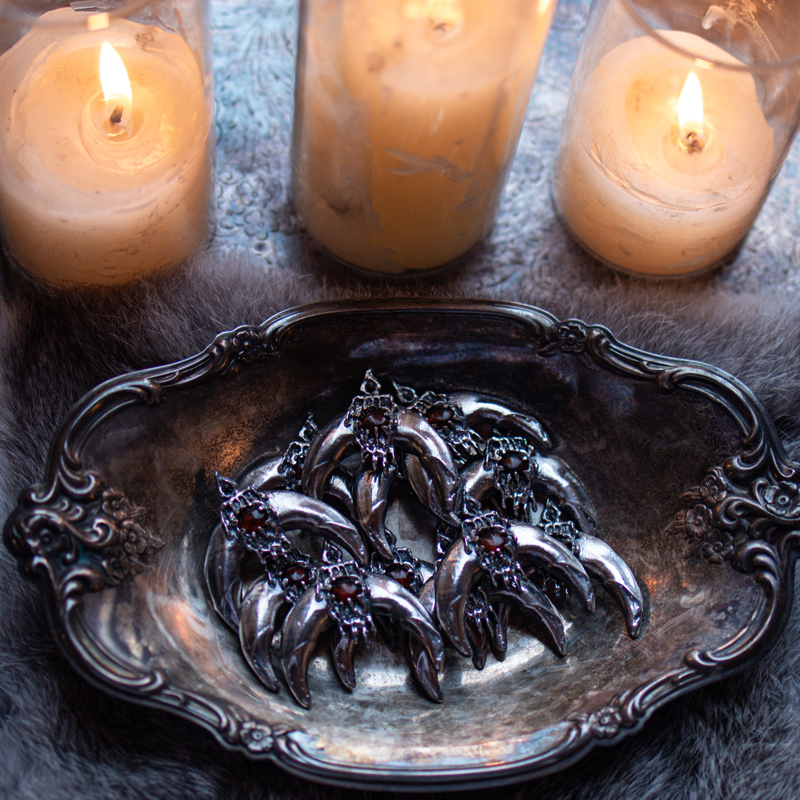
Each piece measures approximately 1.75″ tall and comes on a black satin cord or a oxidized sterling silver chain. Only 10 were made.